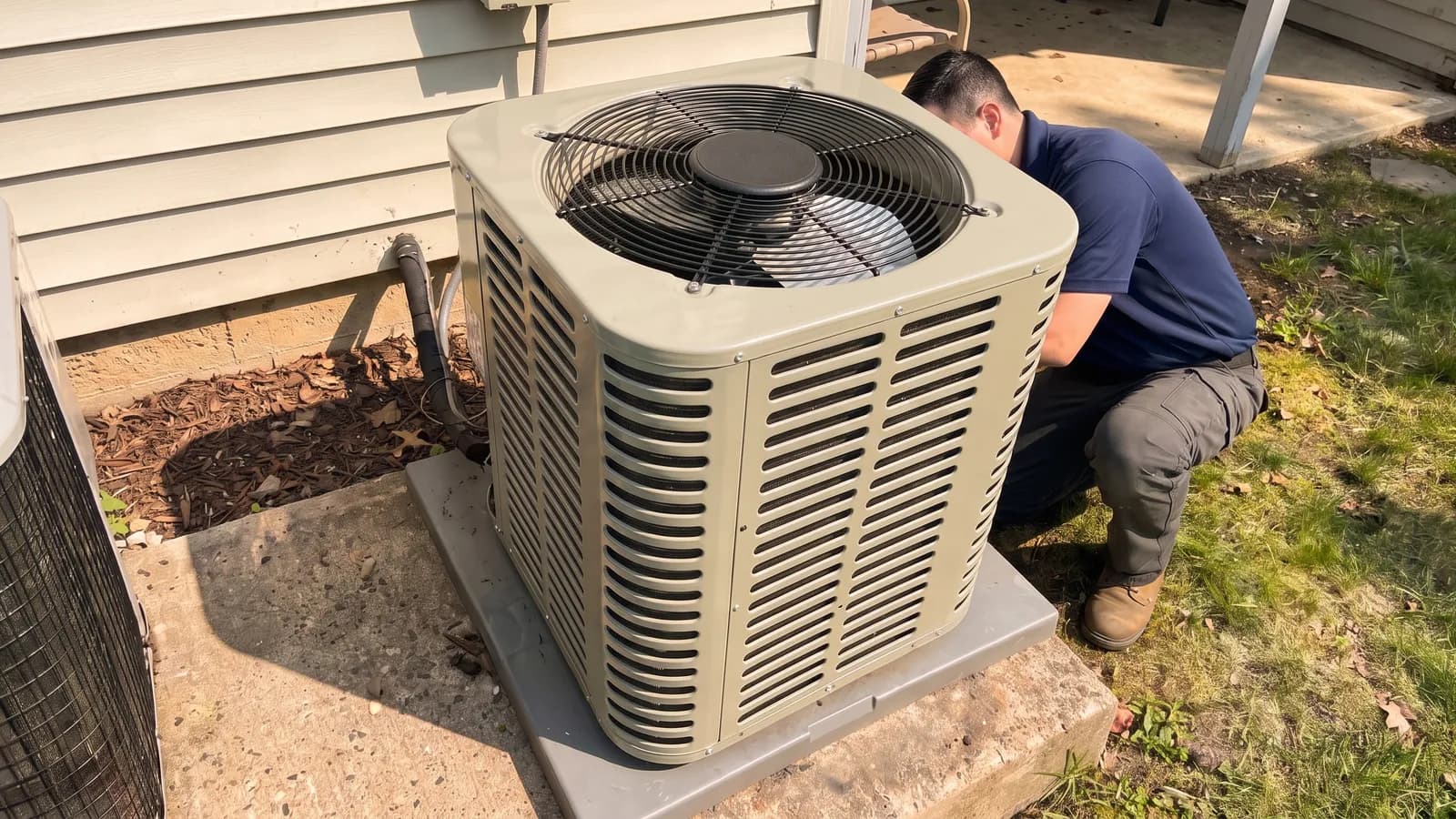
Mid-August is when Southeastern Massachusetts gets its tropics impression: dew points parked in the low 70s, salt-heavy air off Buzzards Bay, nights that never dry out. It's also when we get a specific kind of call from Marion, Wareham, and the South Shore: the AC runs, the thermostat reads 72, and the house still feels like a damp beach rental. Sticky sheets, towels that never dry, that first musty note in the hallway.
The complaint sounds like a broken air conditioner. Usually it's a working air conditioner that isn't being allowed to do half its job.
Cooling and drying are two different jobs
When your system runs, the indoor coil does two things at once: it cools the air, and it condenses moisture out of it, the same way a cold glass sweats on the porch. That water drips off the coil into a pan and down a drain, gallons of it on a humid day. The catch is that condensation only happens while the coil is cold and air is moving across it, and the coil takes several minutes of runtime to get there. Short cycles cool the air and skip the drying almost entirely. Long, steady cycles are where the moisture leaves.
Start with the free fixes
- 1Set the fan to AUTO, not ON. With the fan on ON, the blower keeps running between cooling cycles, blowing house air across a coil still soaked with condensate and evaporating it right back into the rooms. AUTO lets that water drain instead.
- 2Replace a clogged filter. Starved airflow makes the whole system work worse, and in bad cases ices the coil, which is its own failure spiral.
- 3Open the supply registers. Closing vents to "push air elsewhere" mostly unbalances the system and shortens cycles.
- 4Check the thermostat for a dehumidification setting. Many newer thermostats and variable-speed systems can slow the fan to wring more water out; it ships disabled more often than it should.
- 5Keep the windows closed at night. The cool-night-air instinct works in June; in August the overnight air is often the most humid of the day, and it recharges everything the AC dried out.
The oversizing problem nobody wants to hear
If the house cools fast and still feels clammy, cycle length is the tell. An oversized single-stage system satisfies the thermostat in a handful of minutes and shuts down before the coil pulled meaningful water, then repeats, all day, cold and damp. It's the most common cause we find in newer installs where someone rounded the tonnage up "to be safe." This is exactly why we size on a Manual J load calculation: matching equipment to the actual house is what makes the humidity leave, and it's the same discipline the Mass Save program demands of qualifying heat pump installs. Where replacement is on the table anyway, two-stage or variable-speed equipment runs longer, gentler cycles that dry the air as a side effect of how they operate.
Match the symptom to the cause
| What you notice | Likely cause | The fix |
|---|---|---|
| Cools fast, still sticky everywhere | Oversized or single-stage short cycling | Runtime check; staged equipment when replacing |
| Musty blast when the AC first kicks on | Fan on ON re-evaporating the coil, or a dirty coil | Fan to AUTO; coil cleaning on a service visit |
| Sticky upstairs, fine downstairs | Leaky attic ductwork, weak upstairs returns | Duct sealing and balancing |
| Humid all day despite long run times | Undersized returns, duct leakage, or true excess moisture load | Diagnostic visit; whole-home dehumidifier |
| Damp basement no matter what the AC does | Ground moisture, not the cooling system | Standalone basement dehumidifier to a drain |
The ductwork nobody looks at
Return-side duct leaks are a humidity machine. A return running through a vented attic or damp crawlspace that's sucking air through loose joints is importing the most humid air in the building envelope and handing it to the system as its inbound load; the AC spends its capacity drying air it invited in. Sealing and balancing is unglamorous work that shows up immediately in how the house feels, and it's most of what our ductwork service exists to fix.
When it's time to add hardware
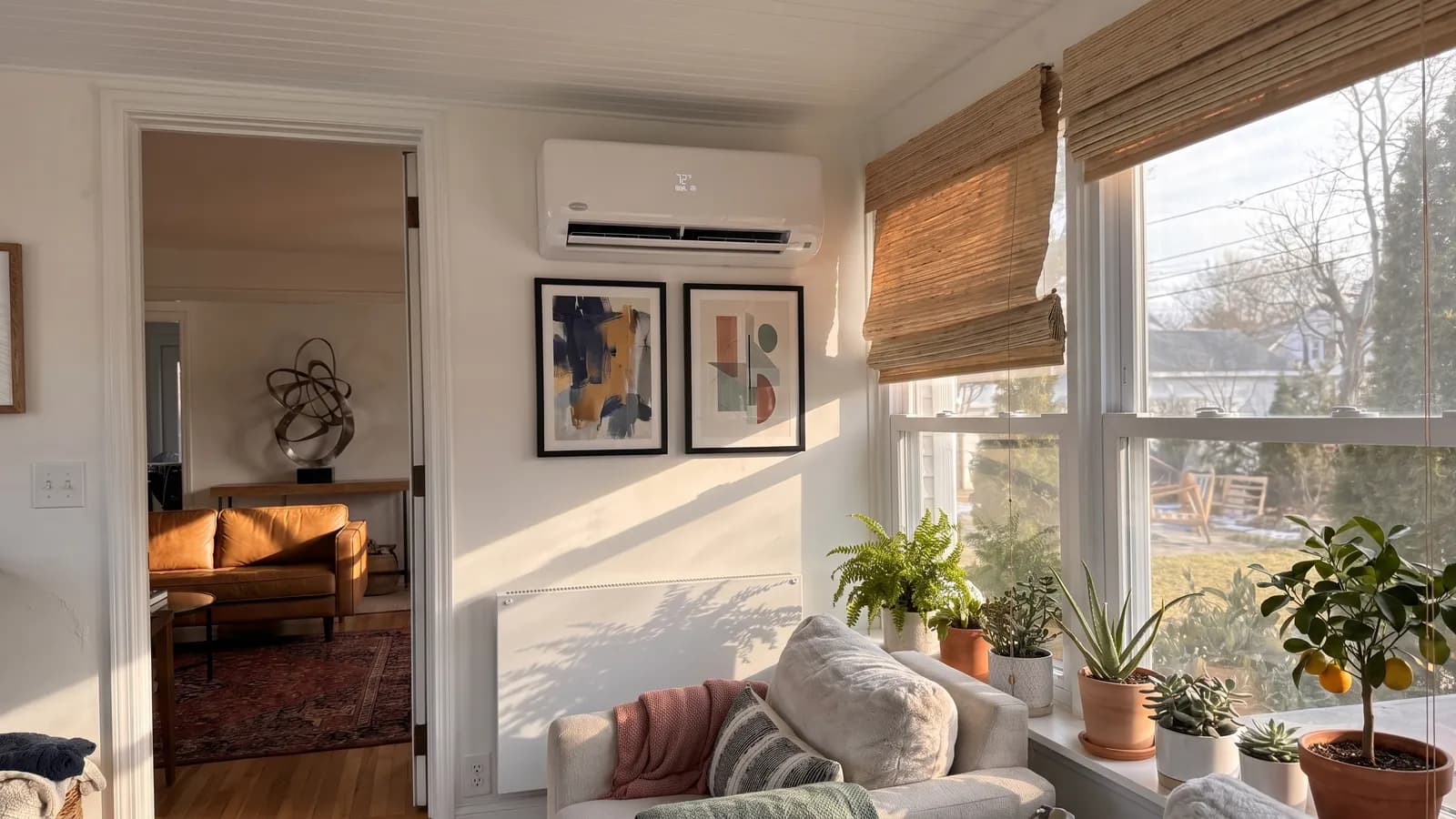
Some houses carry a moisture load the AC legitimately can't keep up with alone: shaded lots that never bake dry, tight new construction full of showers and cooking, big families, coastal air. There the honest answer is a whole-home dehumidifier tied into the return, which holds the house at a set humidity regardless of whether cooling is running. For a single stubborn zone, a bonus room or a converted attic, a ductless mini-split with a dedicated dry mode handles the room on its own thermostat, and the $150 mini-split coupon applies.
If the sticky feeling survives the free fixes, the next step is a diagnostic visit: cycle timing, coil condition, duct leakage, and real humidity readings, with the $50 A/C repair coupon toward whatever it turns up. (508) 944-7623, serving Lakeville, Marion, Wareham, and the rest of our coverage area, with flat-rate pricing quoted before the work starts.