Southeastern Massachusetts runs on old housing stock — 1850s farmhouses in Rochester, shingled capes in Marion, four-squares in Middleborough, antiques all over Plymouth County. Beautiful houses with one shared trait: they were built before ductwork existed, heated first by fireplaces, then coal, then a boiler pushing hot water to radiators. Which means when July humidity arrives, the "cooling system" is three window units and a prayer.
Mini-splits were designed for exactly this building. Here's the honest picture — including the cases where they're the wrong answer.
Why your house has no ducts (and why forcing them in hurts)
Retrofitting conventional ductwork into a boiler-heated antique means surrendering closets, boxing in soffits, and cutting chases through rooms that survived two centuries intact — often sacrificing the third floor or attic to an air handler. High-velocity small-duct systems exist and have their place, but they're invasive and expensive in occupied homes. The mini-split's entire value proposition: a 3-inch penetration per head, a line set in a slim exterior conduit, done. The plaster stays where it's been since Lincoln.
How a ductless system actually lays out
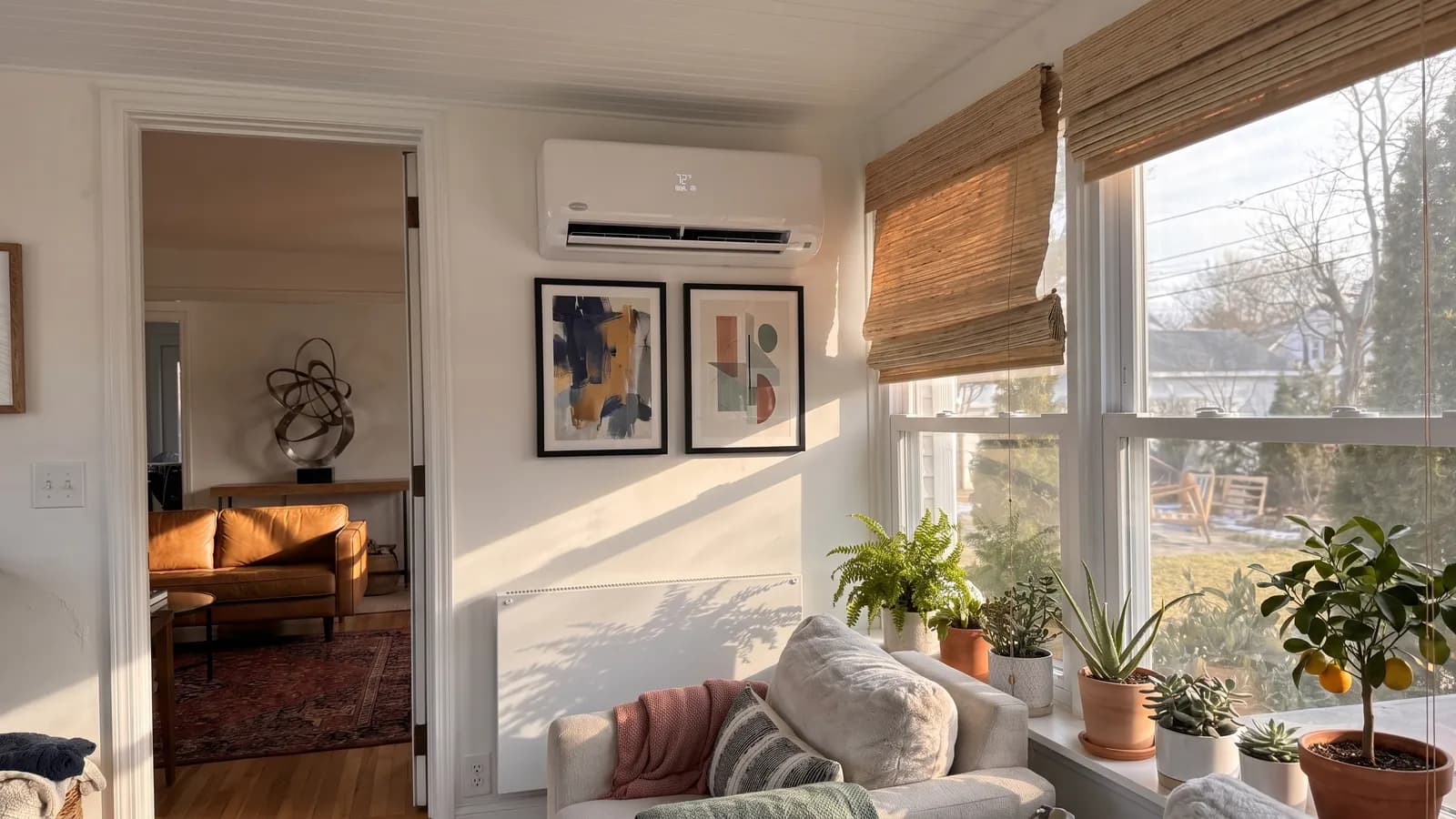
- Single-zone: one outdoor unit, one indoor head — the sunroom that bakes, the primary bedroom, the finished attic office. Installed in a day.
- Multi-zone: one outdoor unit feeding 2–8 indoor heads, each with its own remote and temperature. This is the whole-home configuration for a ductless house.
- Head styles: the familiar high-wall cassette is just the default. Floor-mounted consoles sit where a radiator used to; ceiling cassettes disappear overhead; concealed-duct units hide in a knee-wall or soffit and feed a couple of standard-looking registers — the answer for period rooms where a white plastic rectangle would be a crime.
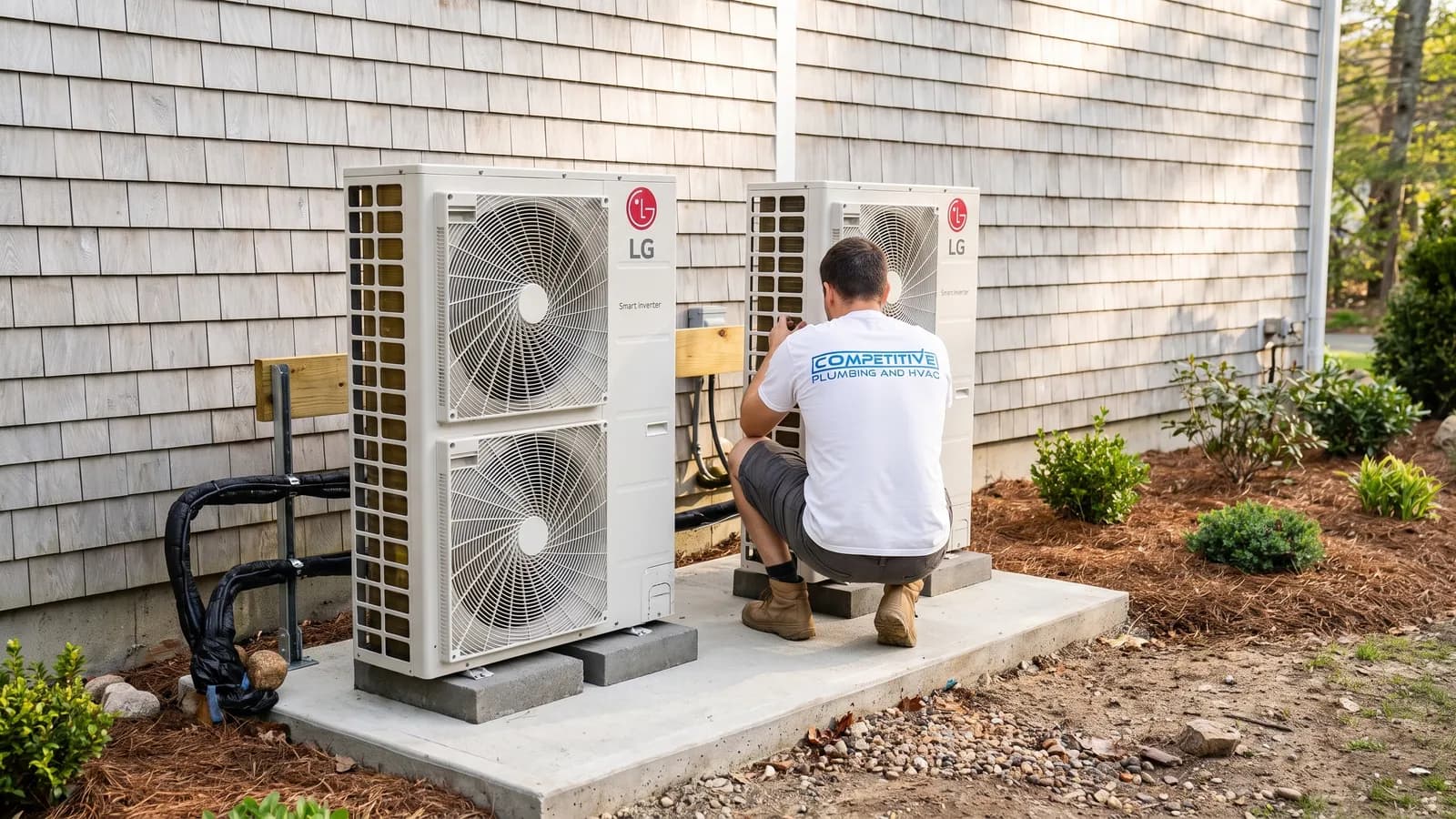
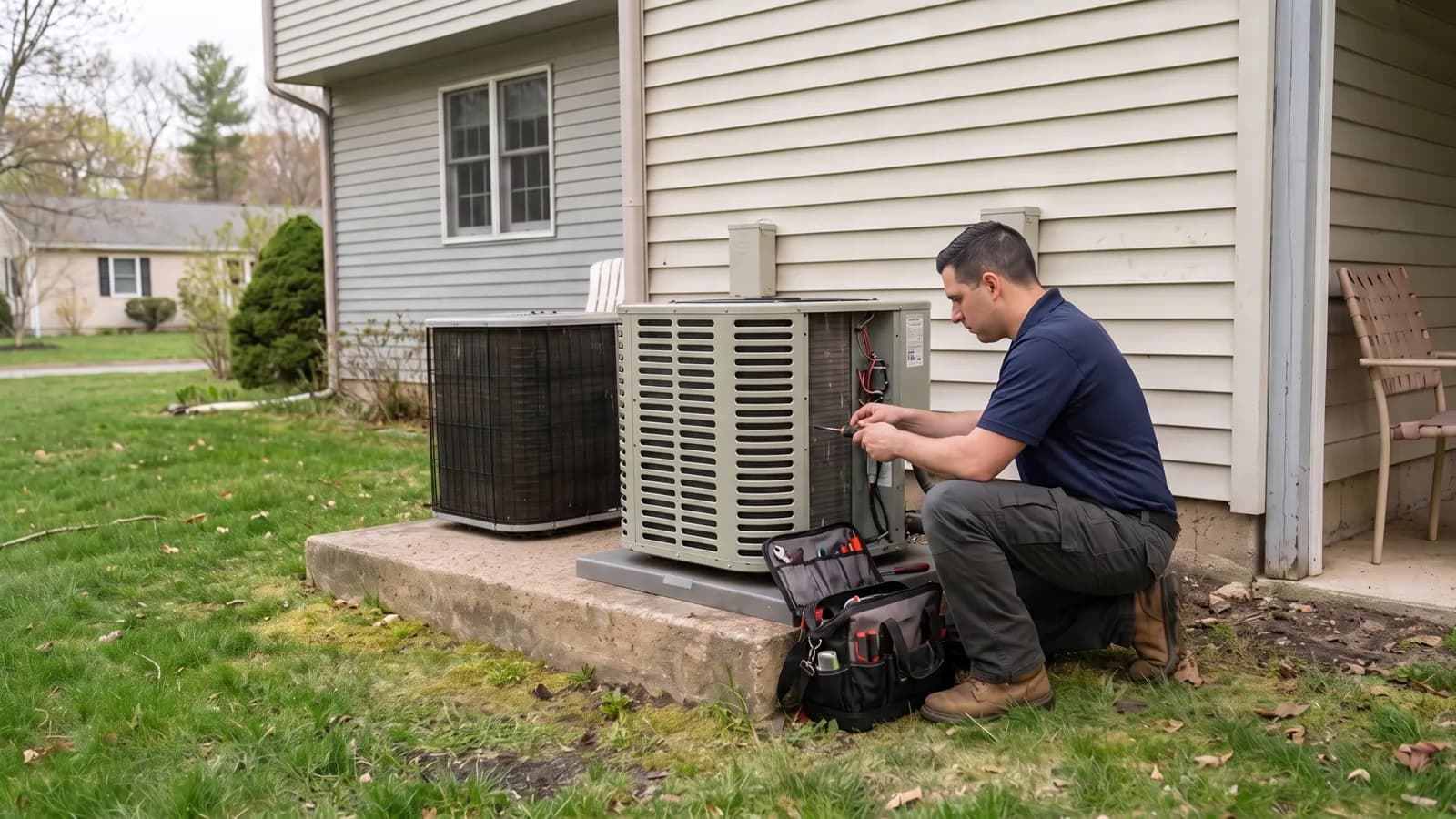
We've put single heads in a Sandwich sunroom, a bedroom system in Plymouth, and paired outdoor units on a shingled home in Falmouth — there are photos of all three in our portfolio. Placement is the craft: heads go where air can actually throw across the room, line sets route where you'll never see them, and the outdoor unit lands on the least-visible elevation that still gets service access.
The winter question, answered with numbers
The objection we hear in every antique kitchen: "heat pumps don't work up here." That was true of 1990s equipment. Modern cold-climate units — Mitsubishi Hyper-Heat and LG's inverter line, both of which we're factory-trained on — maintain 100% of rated heating capacity at 5°F and keep producing heat down to -13°F. Lakeville's record lows don't reach that. Most of our multi-zone customers keep the boiler as backup for the deepest cold snaps and let the mini-splits carry spring, fall, and 90% of winter at a fraction of the oil bill.
Where mini-splits are the wrong answer
- You already have good ducts. If a previous owner added central air with sound ductwork, replacing the conventional system is usually cheaper than converting to ductless.
- Whole-home on a tight budget, many small rooms. A head in every one of eight small rooms gets expensive; a concealed-duct head serving three small rooms, or keeping window units in two rarely-used rooms, is the pragmatic play.
- Historic-district exteriors. Outdoor units and line-set covers may need commission approval on protected facades. Solvable — flat-out concealment strategies exist — but plan it before install day, not after.
The window-unit comparison nobody runs honestly
Three decent window units cost real money every few years, roar at 55–60 dB, block your sashes all summer, drip on the clapboards, and advertise an entry point to anyone walking by. A mini-split head runs at 19–35 dB — quieter than a refrigerator — cools the same rooms on roughly a third of the electricity, heats them in January too, and adds appraisal value instead of clutter. The upfront costs aren't comparable, but neither are the products. Window units are a coping mechanism; a mini-split is infrastructure.
If you're in an older home anywhere in our service area — Lakeville, the SouthCoast, Wareham, the Upper Cape, up through the South Shore — a site walk takes half an hour. We'll tell you head count, placement, what qualifies for the rebate, and what it costs, in writing. Call (508) 944-7623 or start with the mini-split service page.