Every January, Southeastern Massachusetts gets at least one stretch where the overnight lows lose their teens. The wind comes off Buzzards Bay, wind chills go below zero, and our phone starts ringing at sunrise: no water at the kitchen sink in Middleborough, a split pipe over a garage in Lakeville, a cracked spigot in Wareham that nobody will discover until the first warm Saturday in April.
The pattern never changes, because frozen pipes aren't bad luck. Water freezes where plumbing meets cold air, and every house has the same handful of meeting points. Deal with those before the cold snap and you sleep through it.
The six places pipes actually freeze
- Kitchen and bathroom pipes on exterior walls. The supply lines behind the cabinet share a stud bay with the outdoors, and the cabinet doors block the room's heat from reaching them.
- Crawlspaces and unheated basements. Common under additions and older Capes; one missing piece of skirting or a broken vent louver is all the wind needs.
- Garage plumbing. Any line running through a garage ceiling or wall, especially under a bonus room. Every time the door opens, the garage becomes outdoors.
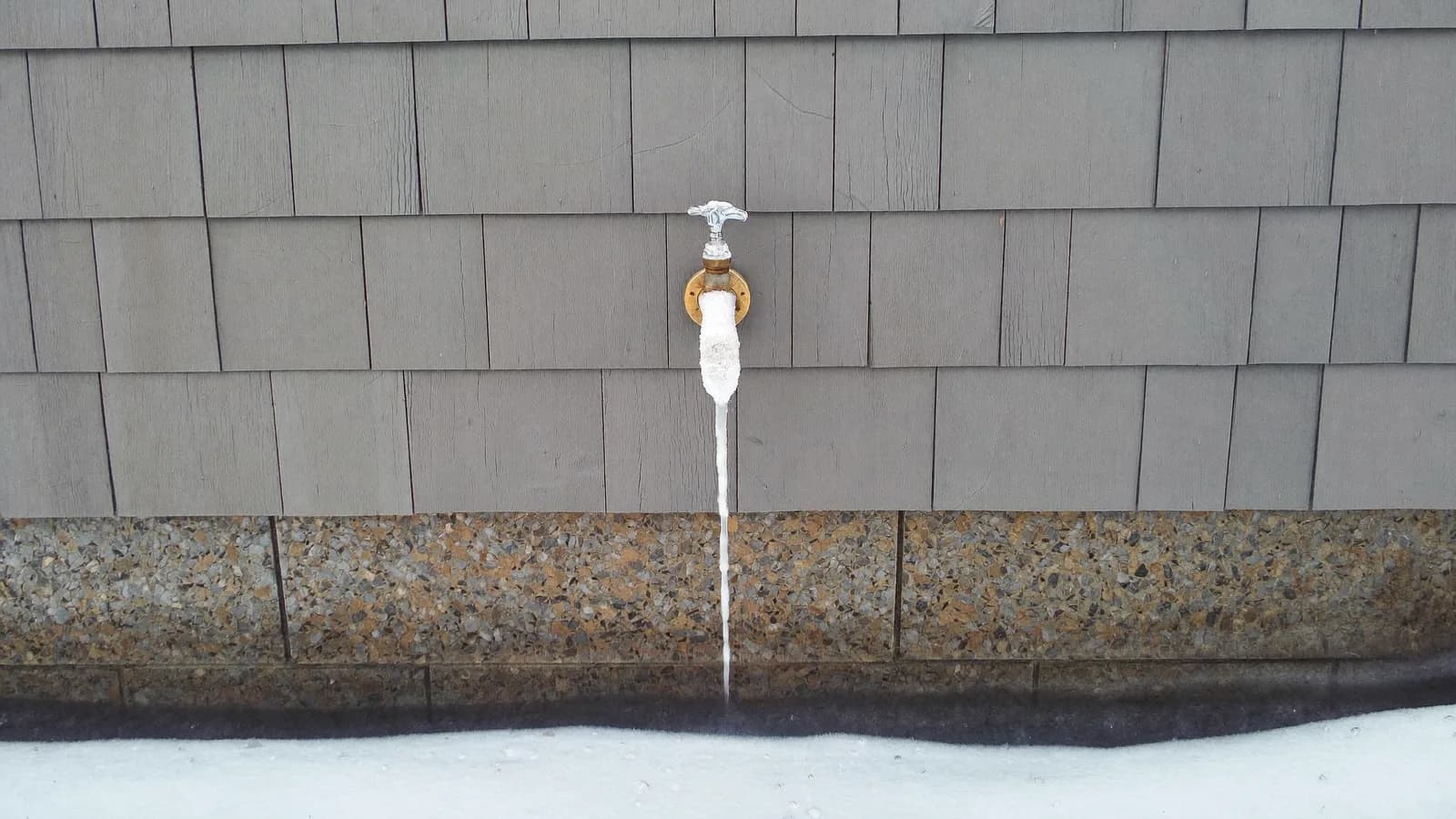
- Outdoor spigots with hoses attached. The hose traps water inside the frost-free barrel, which defeats the whole design. This is the classic hidden burst.
- Cantilevers and rooms over nothing. Kitchen bump-outs and bay windows with plumbing have cold air on three sides.
- Pipes near foundation vents, sills, and rim joists. A draft you'd barely feel is a freeze engine pointed at a pipe eight inches away.
The night-before checklist
- 1Disconnect garden hoses if any are still on. Do it today, not in April.
- 2Let the most exposed faucets drip, cold side, a steady pencil-lead stream. Prioritize fixtures on exterior walls and the faucet farthest from where water enters the house.
- 3Open cabinet doors under sinks on outside walls so room heat reaches the pipes.
- 4Hold one steady thermostat temperature, day and night, at least 60. The overnight setback that saves a few dollars in November is what freezes a wall pipe at 4 a.m. in January.
- 5Close the garage door and keep it closed if any plumbing touches the garage.
- 6Leaving town? Keep heat at 55 or higher, shut the main, and open faucets to relieve pressure. A neighbor who walks through once a day beats every gadget.
Faucet's dry: now what
No water at one fixture while the rest of the house runs means ice in the branch line. First move: find your main shutoff and make sure it turns. It's usually where the water line enters the basement, street side of the house, near the meter. The reason this comes first: frozen pipes rarely leak while frozen. Ice expands, splits the copper quietly, and the flood starts when it melts. If a pipe did split, the shutoff is the difference between a fitting repair and a very bad morning.
Then thaw gently, working from the faucet end toward the frozen section, with the faucet open so melting water has somewhere to go. A hair dryer on the pipe, a space heater warming the room or cabinet, towels soaked in hot water and wrapped around the copper. Patience is the tool here; most residential freezes let go within an hour or two of gentle heat.
When it's our problem instead of yours
Call us when the freeze is somewhere you can't reach or can't find, when a section has already burst, when it's a repeat customer (the pipe that froze last winter will freeze again until the real fix happens), or when the whole house is dry, which can mean the main service line. The permanent fixes are usually unglamorous and effective: insulating a rim joist, rerouting a line out of an exterior wall, adding heat cable to a crawlspace run, or swapping a standard spigot for a properly pitched frost-free one.
We answer emergency plumbing calls around the clock across Lakeville, Middleborough, Freetown, and the rest of Southeastern Mass: (508) 944-7623. Flat-rate pricing quoted before the work starts, and if you're new to us there's $50 off your first service.