A good share of winter calls to our line open with 'the furnace is making a noise.' By the time we've asked two questions, it's a boiler. No harm done, we knew what was meant. But the distinction isn't pedantry: the two systems share almost nothing but a gas line, and knowing which one you own changes what breaks, what it costs, and how fast the right person with the right parts gets to your basement in Middleborough.
The 30-second check
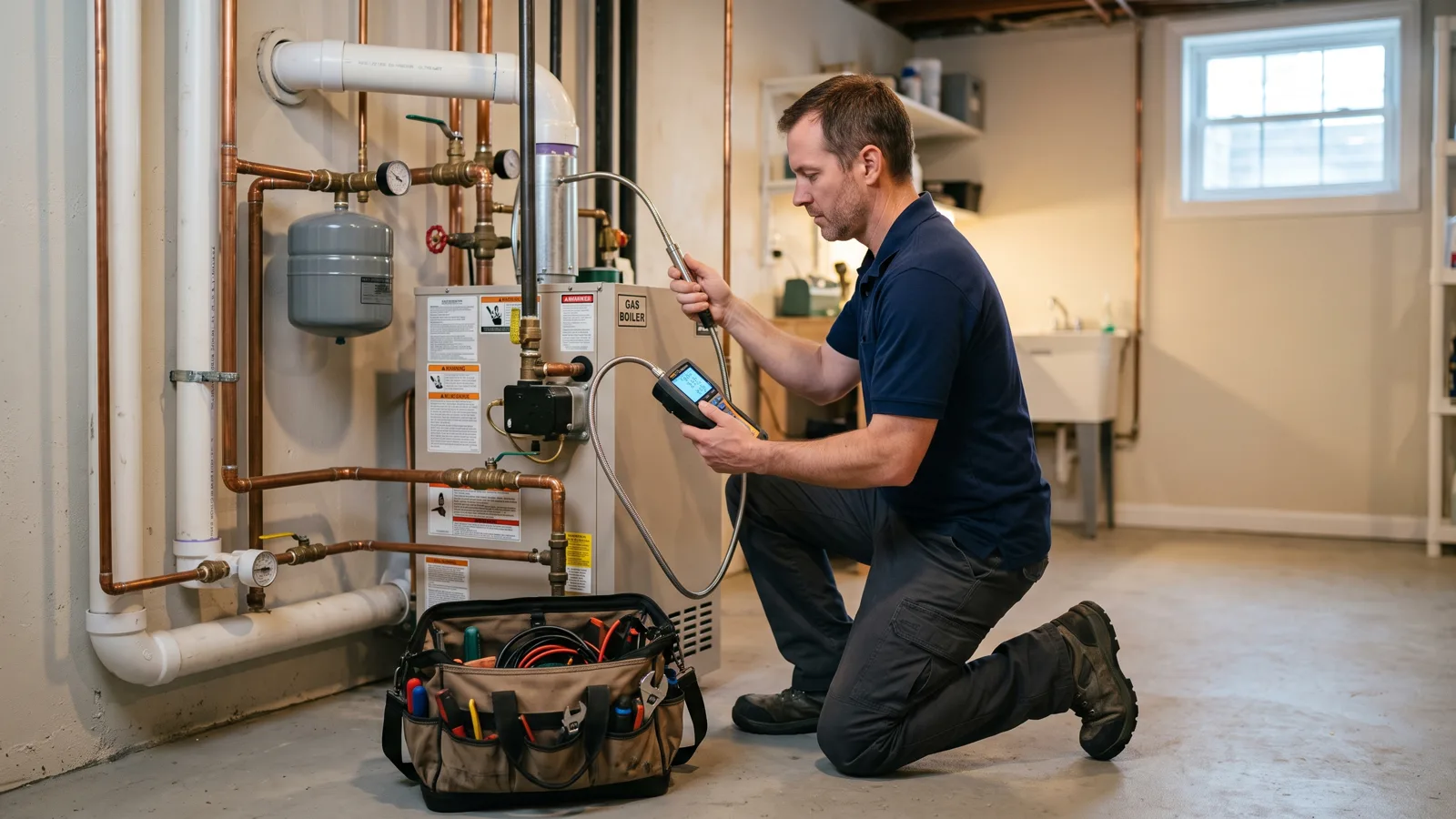
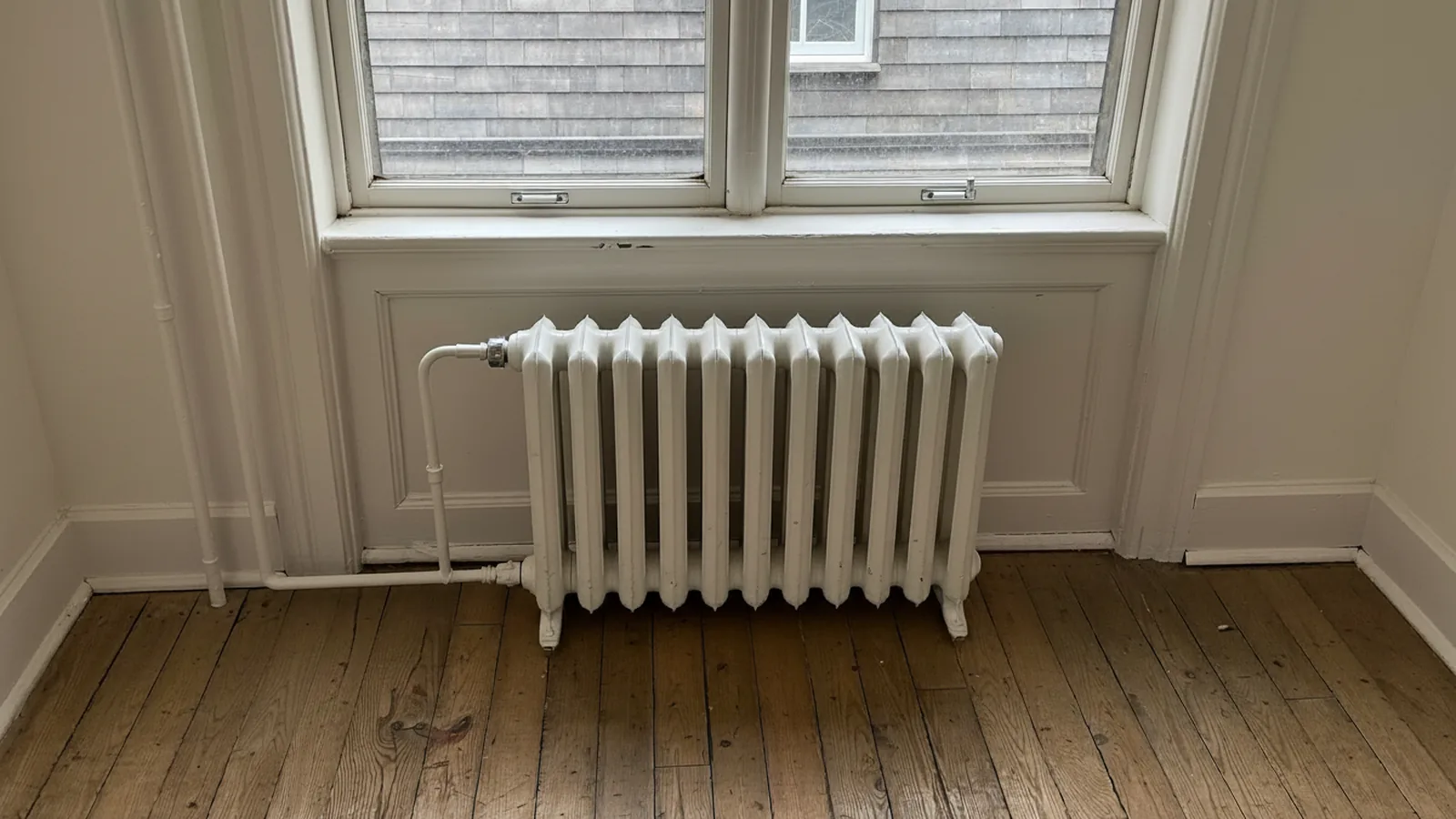
Walk to the nearest room and look at what the heat comes out of. Cast iron radiators, wall panels, or baseboard running along the floor: you have a boiler. It heats water and pumps it through the house. Floor, wall, or ceiling grilles that blow warm air: you have a furnace. It heats air and pushes it through ducts. Backup check in the basement: a boiler is a compact cabinet wrapped in copper or black pipe with a pump or two; a furnace is a taller sheet-metal cabinet with big rectangular ducting coming off the top like a tree trunk.
Around here the split follows the age of the house. New Bedford three-deckers and the pre-war homes near the town centers often still run steam (one huge pipe per radiator, a hiss and a clank on cold mornings). The Capes and ranches that filled in Lakeville, Freetown, and the South Shore through the 60s and 70s are mostly hot-water baseboard. Furnaces showed up in force with the newer subdivisions, because builders could hang central air on the same ductwork.
The curveball: hydro-air
Plenty of homes in the region, especially 80s and 90s colonials, run hydro-air: a boiler heats water, the water feeds a coil inside an air handler, and ducts deliver the heat. Warm air at the registers, boiler in the basement. If your 'furnace' has copper pipes running into a big metal box, that's the setup, and it matters, because the fix for weak heat might live on the water side, the air side, or the handoff between them.
What breaks on each
| Boiler | Furnace | |
|---|---|---|
| Classic mid-winter failure | Stuck circulator or zone valve: one loop of the house goes cold | Failed igniter or dirty flame sensor: no heat anywhere |
| The noise complaint | Kettling (a rumble like a giant tea kettle): sediment on the heat exchanger | Screeching or rumbling blower bearings |
| The quiet danger | Leaks: a failing expansion tank or weeping relief valve | A cracked heat exchanger putting carbon monoxide in the airstream |
| Air problems | Trapped air gurgling in baseboards; needs bleeding | Clogged filters choking airflow and cooking the heat exchanger |
| Typical lifespan, maintained | 20 to 30 years, cast iron sometimes more | 15 to 20 years |
What each one wants from you
- Furnace owners: change the filter every one to three months in season. It's the single highest-leverage maintenance act in HVAC, and the forgotten filter is behind half the airflow complaints we see.
- Boiler owners: glance at the pressure gauge monthly (usually 12 to 20 psi when warm) and listen for new gurgles; air in the loops means the system needs bleeding. Water on the floor near the boiler is never seasoning, it's a call.
- Both: annual professional service, combustion test included. A boiler that also makes your domestic hot water through a tankless coil or indirect tank works twelve months a year and repays the attention. Book it against the $25 maintenance coupon.
When the answer is neither
When a 25-year-old system starts eating repair money, the modern menu is wider than like-for-like. High-efficiency condensing boilers and 96 percent furnaces cut fuel use hard, and for a lot of homes the right move is a cold-climate heat pump, alone or paired with the boiler as dual fuel. That decision deserves a load calculation and real numbers side by side, not a guess made during a no-heat emergency, which is the whole argument for dealing with a tired system in the off-season.
Whichever machine is in your basement, we install and service it: boilers, furnaces, steam included, across Lakeville, Middleborough, Freetown, and the rest of Southeastern Mass. Flat-rate pricing before any work starts, and $200 off a boiler installation if replacement is the verdict: (508) 944-7623.