February is heat pump judgment month in Massachusetts. It's when the neighbor who warned you about them looks over the fence, when the Facebook town group threads heat up, and when the units themselves either deliver or don't. So here's the report from the field, from a company that installs them and also installs the boilers and furnaces they're compared against: properly specified cold-climate heat pumps go through a Southeastern Mass winter without drama.
Where 'they don't work in the cold' came from
The skepticism isn't imaginary, it's just old. Heat pumps installed here in the 80s and 90s were single-speed units designed around cooling, with heating as a bonus feature. Below about 25 degrees they leaned on electric resistance backup coils, which run at three times the cost, and homeowners noticed. That's the era the reputation comes from, passed down like town lore.
The machines changed. Variable-speed inverter compressors, enhanced vapor injection, and smarter refrigerants mean a unit carrying the cold-climate (ccASHP) designation is bench-verified to deliver rated heat at 5 degrees, and keeps operating into the negatives. Massachusetts sits squarely inside the design envelope; Maine, a colder state than ours, now installs more heat pumps per capita than anywhere in the country.
What the cold actually changes
Physics still applies: as the outdoor temperature falls, there's less heat in the air to move, so capacity and efficiency taper. The engineering question was never whether output declines, it's whether the unit still covers the house at your design temperature. For most of Plymouth County that design point is around 9 degrees. A correctly sized cold-climate unit covers the load there with margin.
| Outdoor temp | What a cold-climate unit is doing | What you notice |
|---|---|---|
| Above 32 | Cruising at high efficiency, 3x to 4x better than resistance heat | Nothing; quiet, steady output |
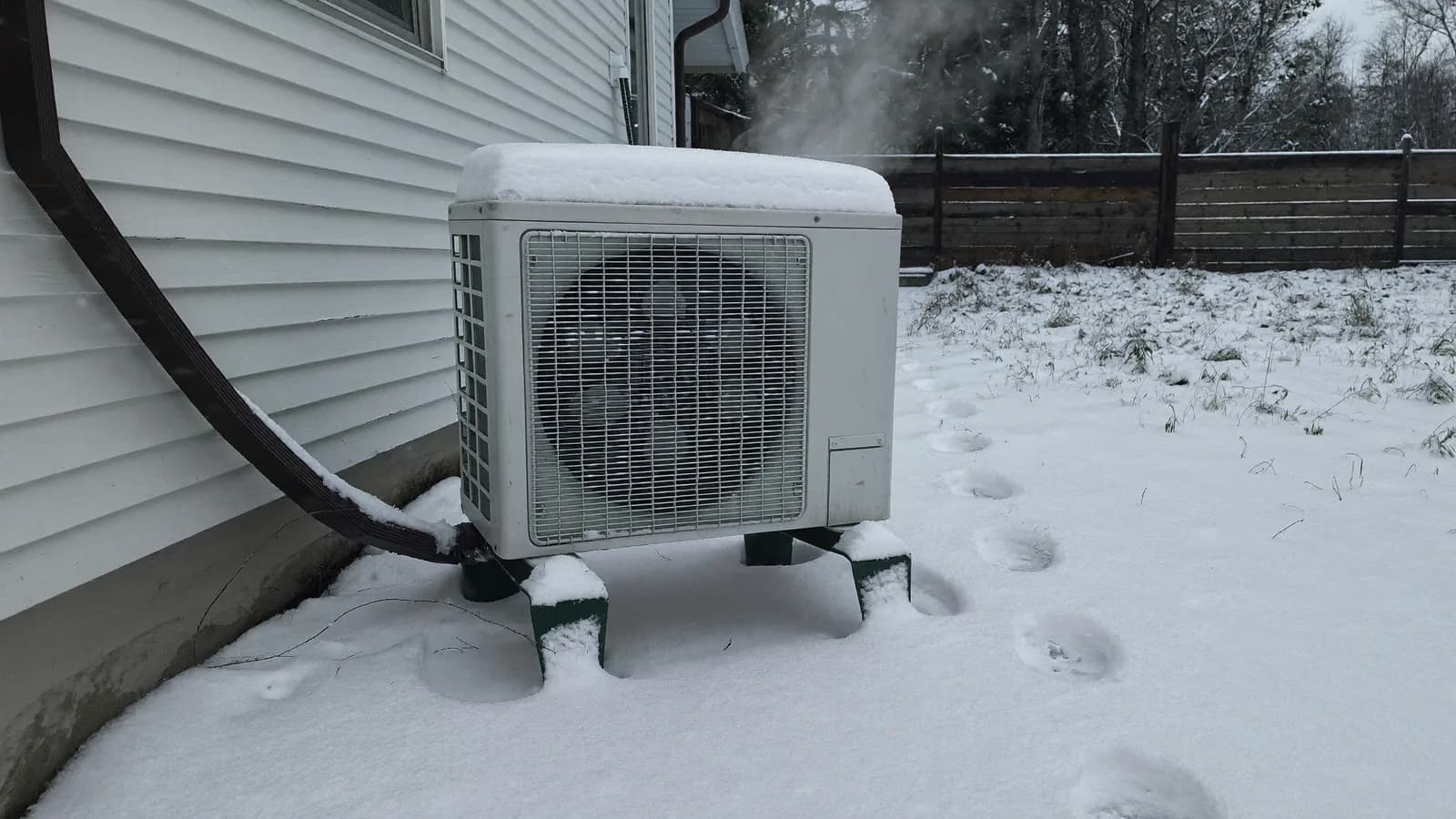
| 15 to 32 | Longer runs, periodic defrost cycles | Occasional steam plume and whoosh outside |
| 0 to 15 | Full-capacity territory for ccASHP-rated units | Continuous steady running; that's by design |
| Below 0 | Still heating at reduced capacity; backup may assist | Supplemental heat runs if the system has it |
Winter performance is decided on installation day
- Sized to the heating load. A Manual J calculation on the actual house, not a rule of thumb off the square footage. Undersized struggles; oversized short-cycles and dehumidifies poorly in July.
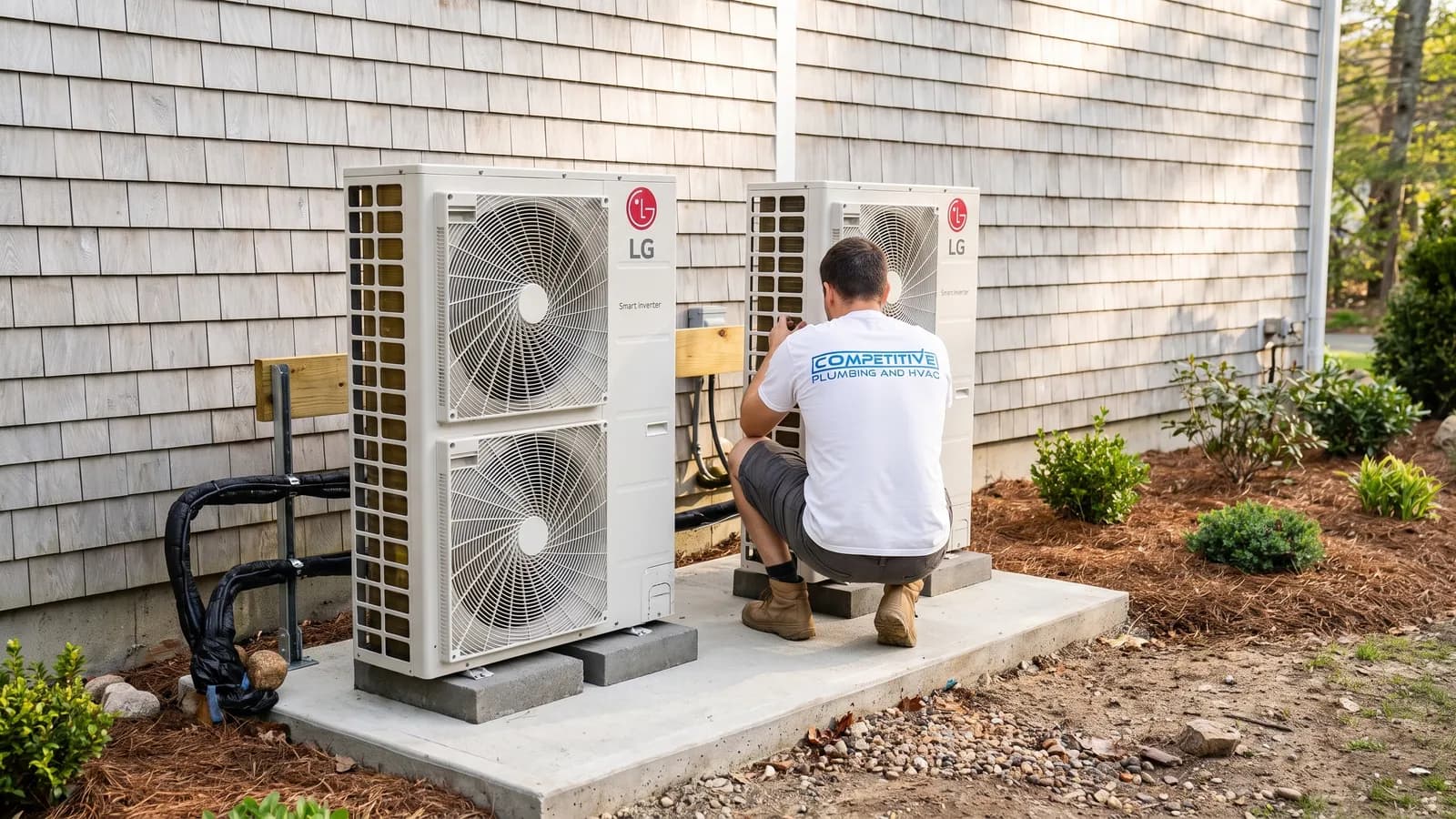
- Mounted above the snow line. On a stand or wall brackets with clearance below, so drifts don't bury the coil and defrost water has somewhere to drain instead of freezing into a pedestal of ice.
- Placed out of the drip line. Roof runoff refreezing inside a unit is a service call we'd rather prevent than bill.
- Backup strategy chosen on purpose. Full-load heat pump, or a dual-fuel setup that keeps your existing boiler for the coldest stretch. Both are legitimate; the wrong answer is not deciding.
The three winter habits that matter
- 1Set it and leave it. Heat pumps like steady targets, not nightly setbacks. Big morning recovery jumps are what summon expensive backup heat on cold mornings.
- 2Broom the unit after storms. Keep 18 inches clear around it and never let snow bury the fan side. Gentle with the fins; they bend.
- 3Mind the filters and the app. A clogged filter chokes airflow and tanks capacity exactly when you need it most. Most units will also happily show you if backup heat is running more than it should.
On operating cost: against oil, propane, or electric baseboard, a cold-climate heat pump usually wins the winter in this region; against low natural gas rates the race is closer and dual fuel often makes the most sense. The money side, including up to $8,500 in Mass Save rebates and the 0% HEAT Loan, gets its own treatment in our rebate guide.
Thinking about one, or living with one that isn't keeping up? We do honest load calculations and we'll tell you if your house is a dual-fuel house. Heat pump installation and ductless mini splits across Lakeville, Middleborough, Freetown, and all of Southeastern Mass: (508) 944-7623. There's $150 off mini split installation running now.