Nobody researches water heaters for fun. You're here either because yours died this morning (skip to the end — call us, we stock tanks and swap same-day) or because it's 10 years old and you're planning ahead like a responsible adult. For the planners: here's the comparison with the thumb off the scale.
The whole argument in one table
| Tank (gas) | Tankless (condensing gas) | Heat pump (electric) | |
|---|---|---|---|
| Upfront installed cost | Lowest | Higher — unit plus gas/vent work | Mid, minus $750 instant rebate |
| Typical lifespan | 8–12 yrs (15+ on softener) | 18–22 yrs with annual descale | 12–15 yrs |
| Hot water supply | Fixed — 40/50/75 gal, then recovery wait | Endless at rated flow | Large tank, slower recovery |
| Running cost | Baseline | Meaningfully lower gas use | Lowest — a fraction of standard electric |
| Space needs | Floor footprint | Wall-hung, frees floor space | Needs ~750 cu ft of air (basements fine) |
| Install time | 2–4 hour swap | About a day | Half to full day |
The case for the humble tank
Tanks are cheap, simple, and everywhere. When one fails, we can have a new Bradford White or Rheem in by dinner — including the expansion tank, drain pan, and dielectric unions that the big-box installs mysteriously omit. If you might move within five years, if the budget is tight, or if your household's hot-water pattern is modest and predictable, a quality tank properly installed is a perfectly rational choice, and anyone who shames you toward a four-figure upgrade is selling, not advising.
The honest downsides: you're renting space in your basement to 50 gallons of standing water on a steel liner with a known expiration date, you pay standby losses to keep it hot at 3am, and when three showers and a dishwasher stack up, the fourth person gets the cold lecture.
The case for tankless — and the gotcha nobody prices
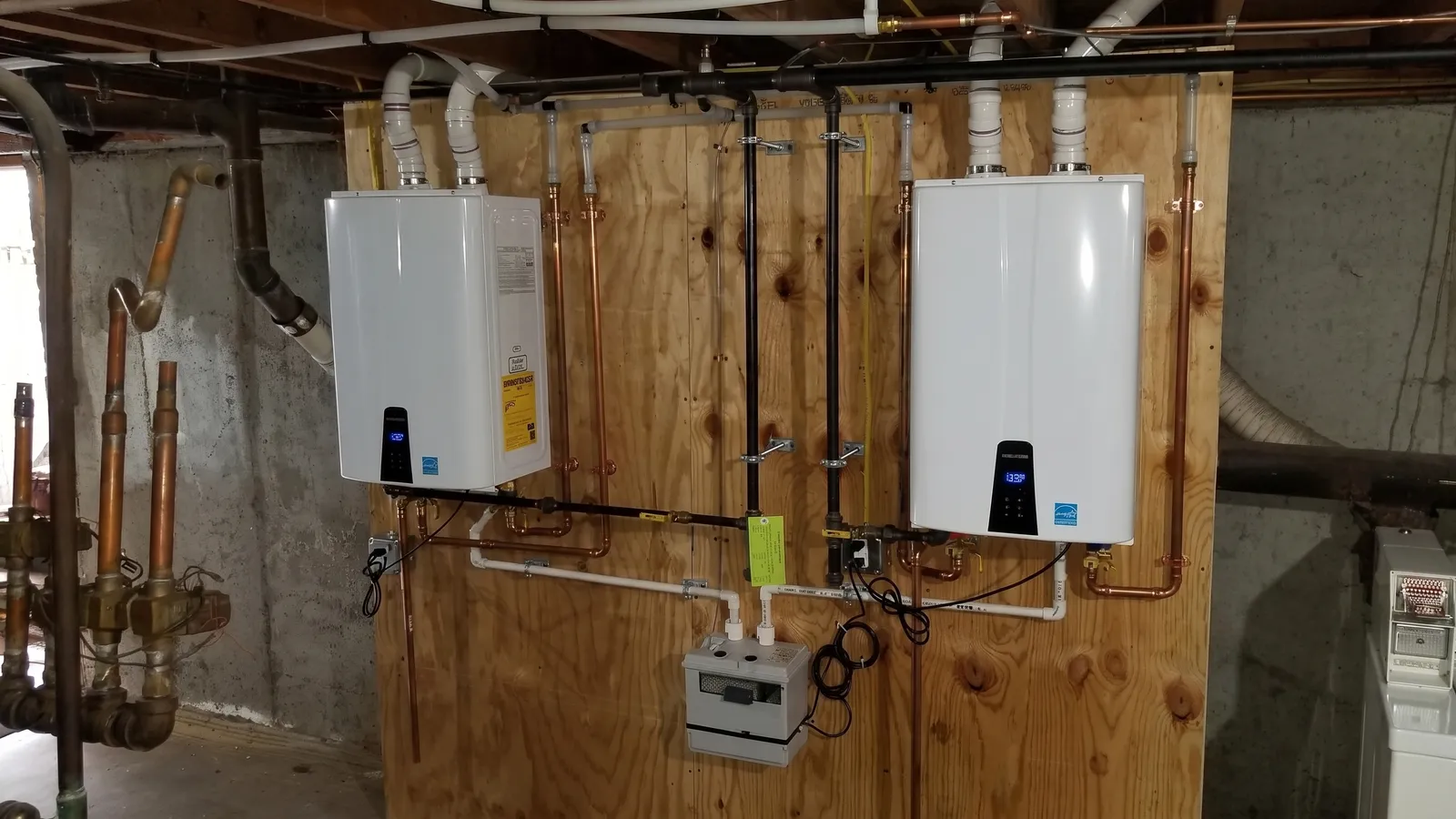
A condensing tankless unit — we install Rinnai and Navien — heats water only when a tap opens, at up to 199,000 BTU. Endless showers, wall-hung with the floor space back, and 18–22 years of service with an annual descale. Over two decades you'd buy two tanks; you'll buy one tankless and burn less gas the whole time. That's the real long-game math.
The dark horse: heat pump water heaters
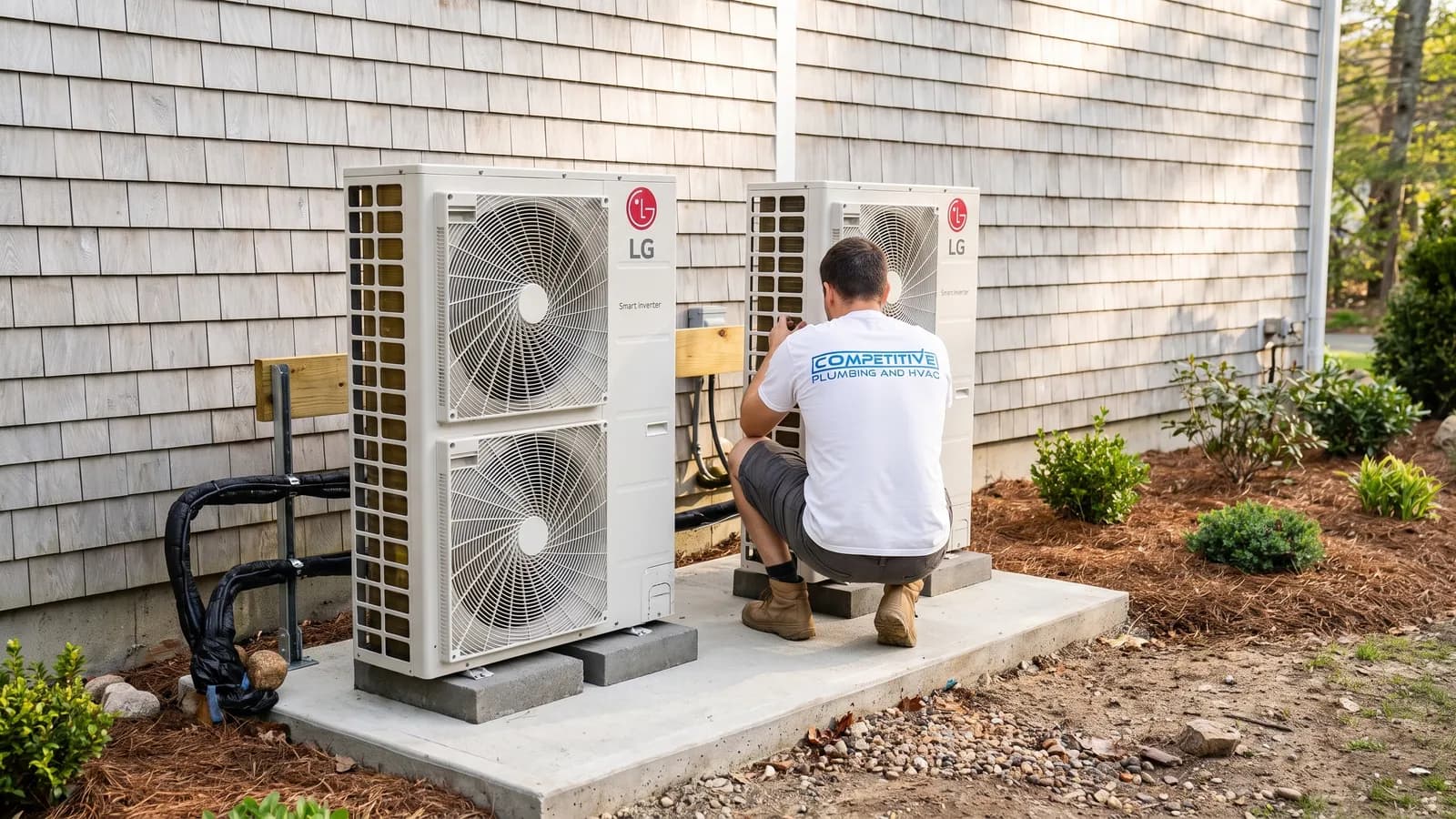
If your current heater is a standard electric tank, stop comparing gas options and look here first. A heat pump water heater (Rheem ProTerra, A.O. Smith Voltex) pulls heat out of your basement air instead of generating it with resistance elements, cutting the electric draw to a fraction. Mass Save pays a $750 instant rebate at install — no mail-in wait — and the unit dehumidifies your basement as a side effect. It needs about 750 cubic feet of air around it, so it's a basement machine, not a closet machine. For all-electric homes in our area, this is usually the strongest option on the board — more on incentives in our Mass Save rebate guide.
Boiler in the basement? Different conversation
If your home heats with a boiler — half of Southeastern Massachusetts — an indirect water heater deserves the first look: a superinsulated tank heated by your boiler through a coil. No burner of its own, nearly nothing to fail, unlimited practical hot water in heating season, and the lowest marginal running cost of anything on this page. We pair a lot of them with boiler installations, and they're the quiet workhorse nobody markets because there's no gadget to sell.
The five-question decision
- 1Fuel today? Gas tank → tank or tankless. Electric tank → heat pump water heater, almost every time. Boiler → indirect first.
- 2Staying 10+ years? Yes strengthens tankless; no strengthens tank.
- 3Run out of hot water now? Frequently → tankless solves it structurally; rarely → don't pay to fix a problem you don't have.
- 4Gas line and venting verdict? Get this priced before comparing anything.
- 5Budget this month vs. this decade? Tank wins the month; tankless usually wins the decade. Both answers are legitimate.
We do all four types across our service area, we put the rebate and the $50 water heater coupon in the written quote, and if your heater is currently flooding the basement floor drain: (508) 944-7623, 24/7, most tank swaps done same-day. The full scope is on the water heater page.