Mud season is honest season for plumbing. The frost lets go, the ground swells with meltwater, and everything winter damaged quietly starts introducing itself: the spigot that split in the January cold snap, the shutoff that seized while nobody touched it, the washer hose that spent one too many years pressurized. None of it is dramatic yet. That's the point of the walkthrough: catch it while it's a line item and not a wet-vac weekend.
The walkthrough, in order
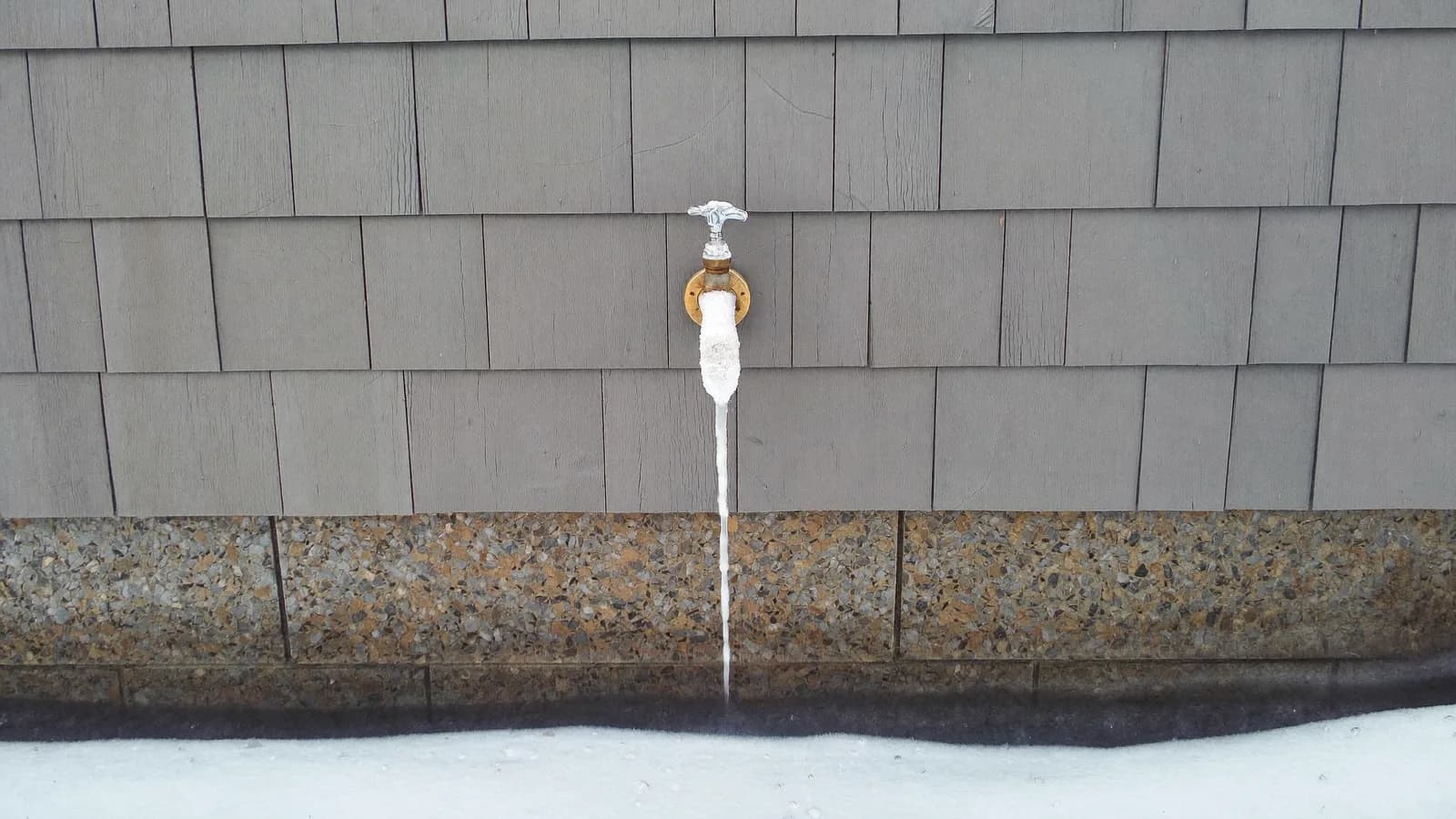
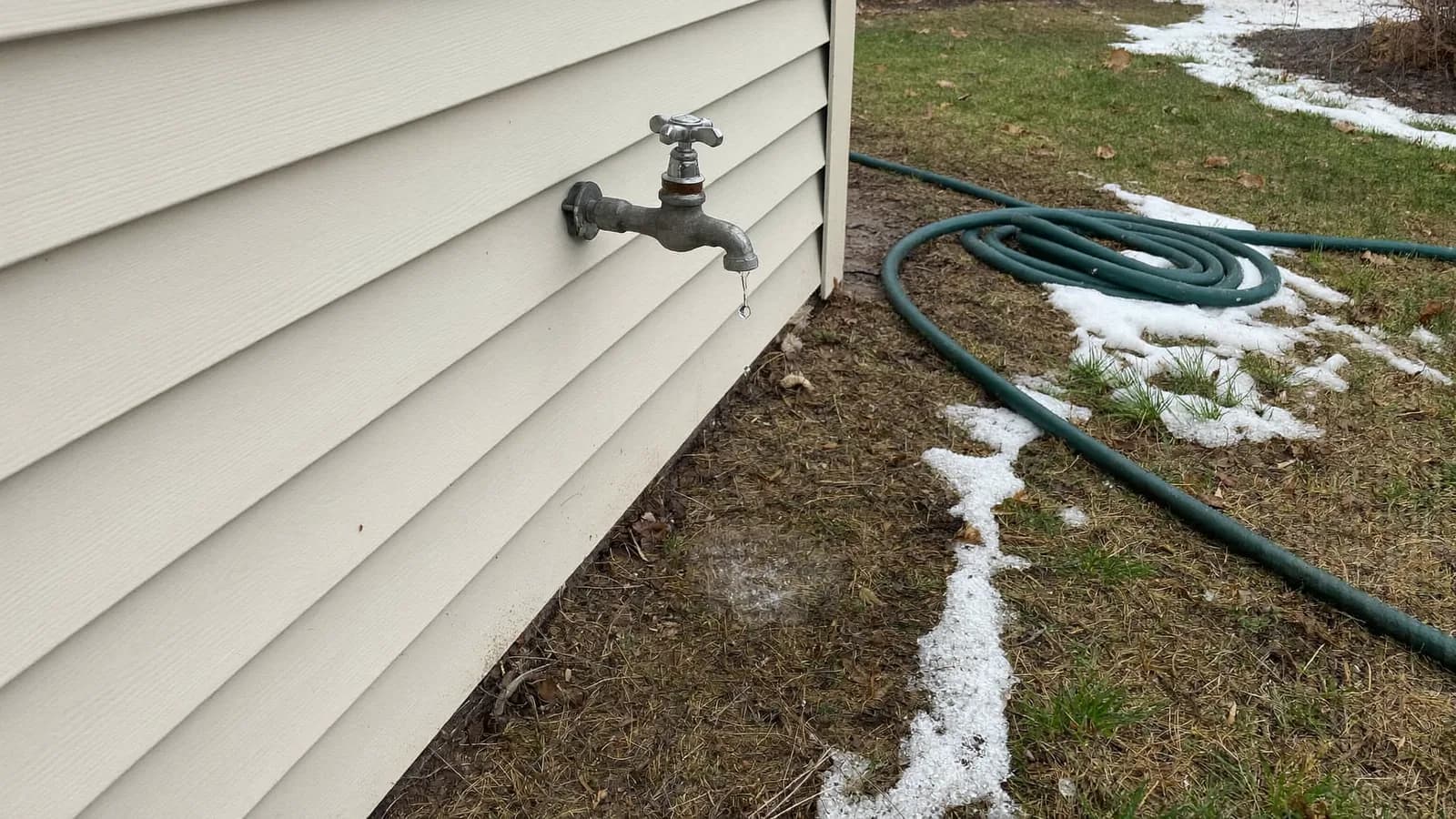
- 1Outdoor spigots, with a spotter. Turn each hose bib on full while someone watches the basement ceiling or wall inside. A frost-free bib that froze with a hose attached splits a foot inside the wall and only leaks while running. Weak flow is a clue too.
- 2The main shutoff. Find it (street side, near the meter), turn it gently closed and open again. If it's seized, weeping, or it's an ancient gate valve that crumbles in your hand, that's a planned swap to a quarter-turn ball valve, on your schedule instead of mid-emergency.
- 3Washing machine hoses. Feel for bulges, cracks at the crimp, rust at the connections. Rubber hoses are cheap and they fail open at full house pressure, usually while nobody's home. Braided stainless, hand-tight plus a quarter turn, done.
- 4Toilet supply lines and under-sink shutoffs. One minute per bathroom: any crust, green corrosion, or dampness on the little lines and valves, and any fixture shutoff that won't turn.
- 5Water heater base and fittings. After its hardest-working season, look for rust streaks, white mineral crust on the fittings, or moisture in the drain pan. Rumbling and popping sounds are sediment, which is its own spring project.
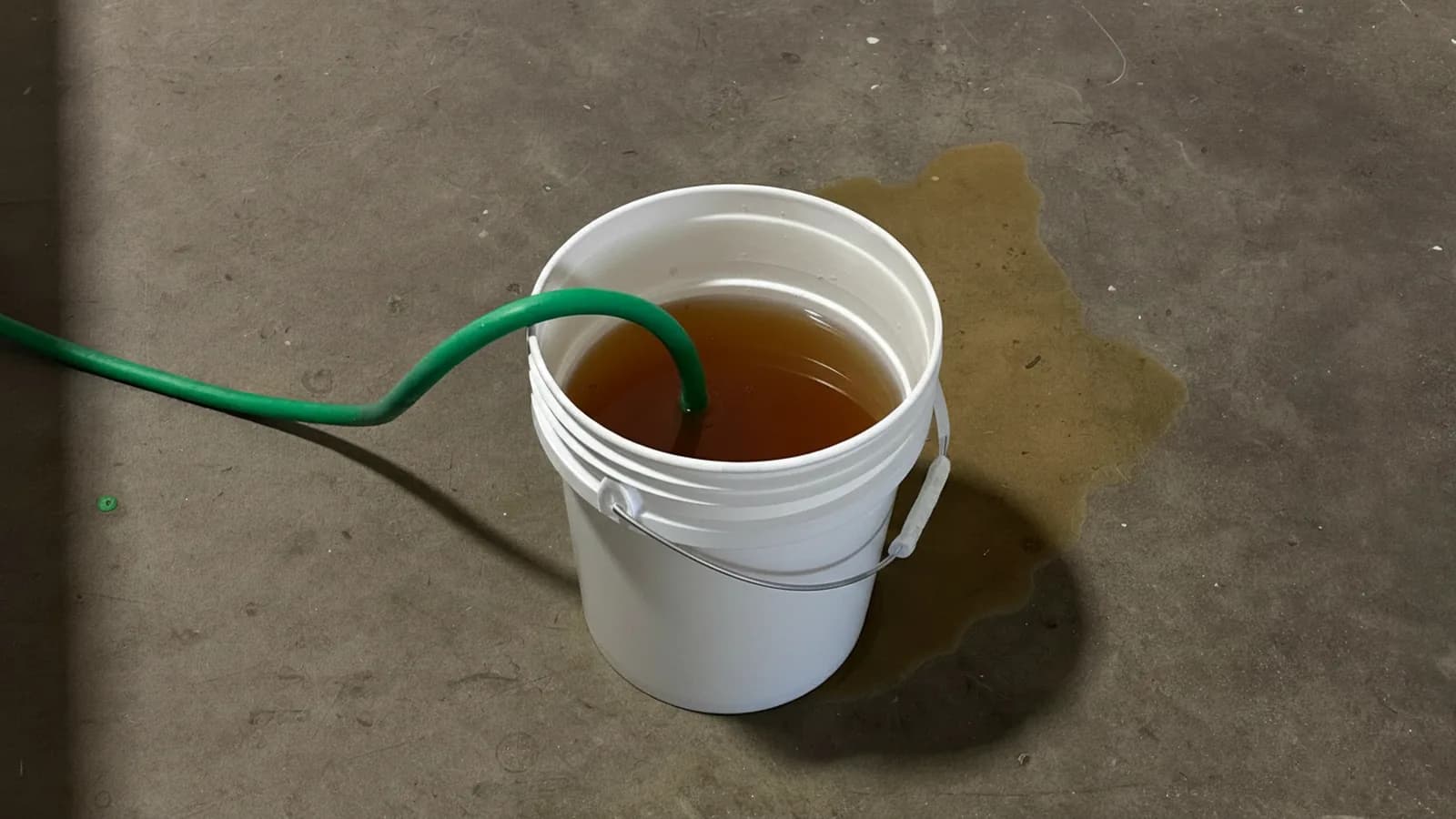
- 6Sump pump, before the spring rain. Pour a bucket of water in the pit and make sure the float brings the pump on and the water leaves. Check that the discharge line outside actually daylights away from the foundation and didn't crack over winter.
- 7The meter test. Every fixture off, note the meter reading (or the little leak dial), wait ten minutes, look again. Movement means water is going somewhere it shouldn't, and finding out costs nothing.
What the thaw itself stirs up
Melt season also loads the ground with water. If the basement grows a musty note or the sump runs constantly, take it seriously before the April rain stacks on top; grading, gutter extensions, and a healthy pump handle most of it. And if drains that behaved all winter start gurgling as the water table rises, roots and bellies in the line show up first in spring. That's a camera-and-cleaning conversation, not a plunger one.
Anything on the list fail its test? That's what we're for. Emergency plumbing when it's already wet, scheduled visits for everything else, across Lakeville, Middleborough, Freetown, and all of Southeastern Mass: (508) 944-7623. First time calling us? There's $50 off waiting.