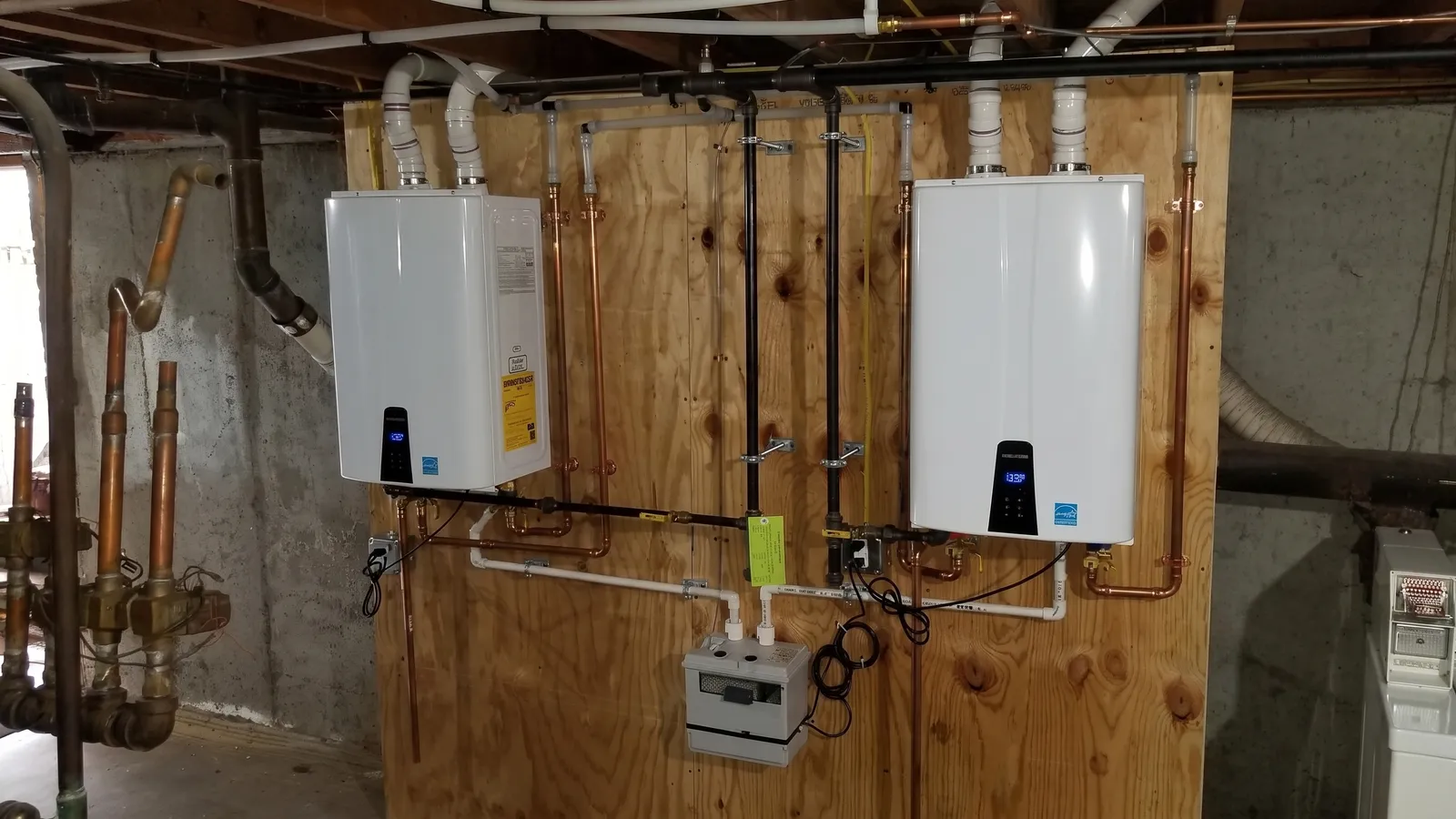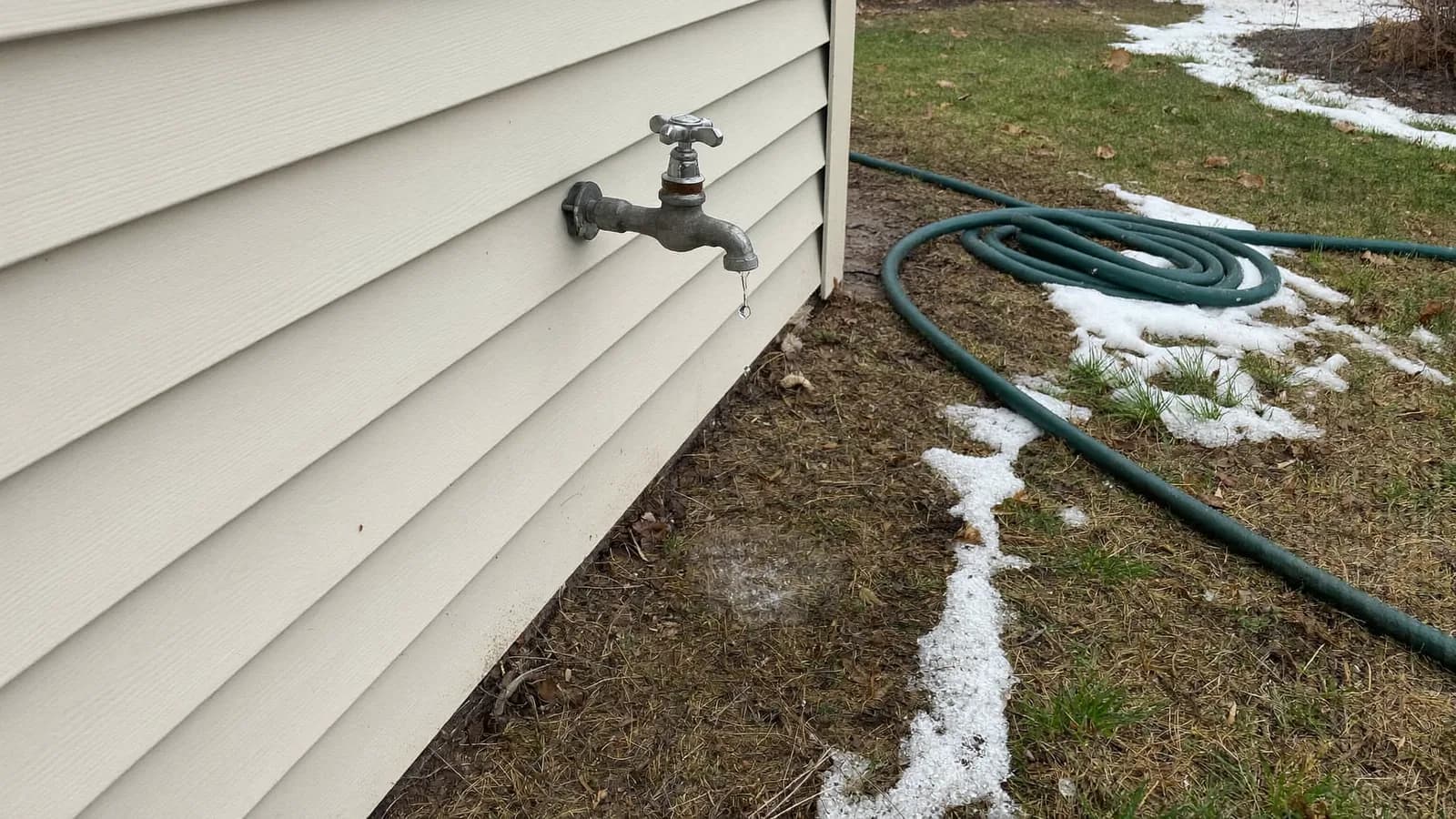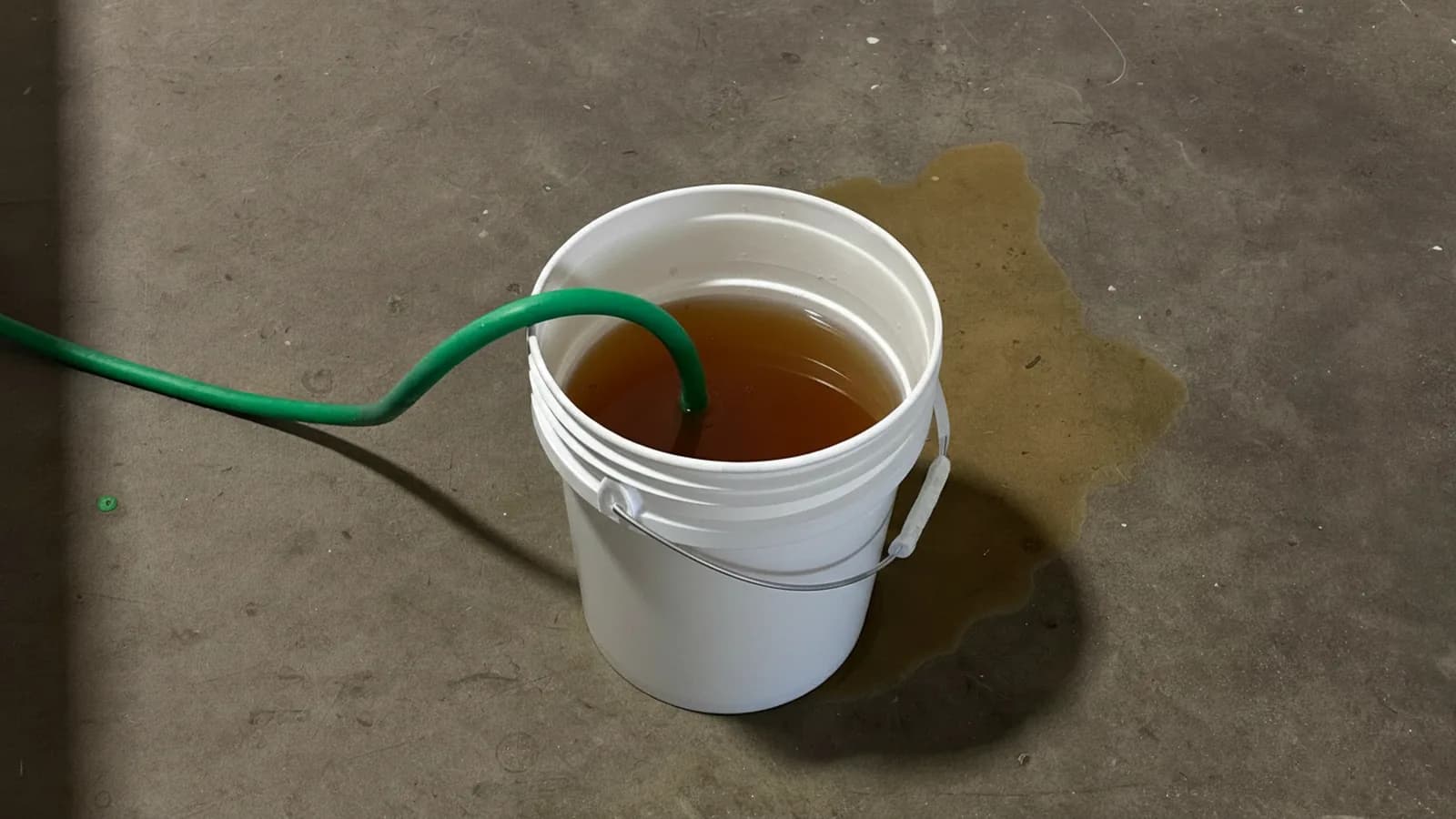
Stand next to your water heater while it's recovering after the morning showers. Quiet, steady burner: healthy. A rumble like popcorn in a steel drum: that's sediment, and it's the most preventable way tanks die young around here. April, after the heater's hardest season and before the year gets busy, is a fine time to deal with it.
What the popping actually is
Every gallon of water carries dissolved minerals, and heating pushes them out of solution. They settle to the tank floor and pack into a layer, faster on the private wells that serve so much of Plymouth County. On a gas heater the burner now heats a blanket of mineral before it heats water: trapped water underneath flash-boils and snaps through the layer, which is the pop and rumble. The insulation works against you twice, longer burner runs on the fuel bill and a tank bottom cycling hotter than design, which is how glass linings crack and steel fatigues. Sediment also steals capacity; a couple inches of it is why the third shower goes lukewarm in a house where it never used to.
What a flush involves
No mystery to the procedure, just care with hot water and old valves. The shape of it:
- 1Kill the heat: gas control to pilot or off, breaker off for electric. Electric elements that fire in an emptying tank burn out in seconds, so this step is not optional.
- 2Close the cold inlet, connect a garden hose to the drain valve, run it to a floor drain or outside, downhill all the way.
- 3Open a hot faucet upstairs to let air in, then open the drain valve and let the tank run until the water goes from cloudy to clear.
- 4Stir the stubborn stuff: crack the cold inlet in short bursts to kick sediment toward the drain, repeat until it runs clean.
- 5Close the drain, refill completely, purge the air at that upstairs faucet, and only then restore power or flip the gas control back on.
The rest of the five-minute physical
- Temperature setting: 120 degrees is the sweet spot for scald safety, energy use, and slower sediment production. Most tanks leave the factory hotter.
- T&P valve: the safety relief on the side should be dry, with the discharge tube ending near the floor. Occasional drips mean pressure or temperature trouble, and that's a call, not a plug.
- Anode rod: the sacrificial rod inside corrodes so the tank doesn't. Checked around year four or five and swapped when it's spent, it's the cheapest years-of-life purchase a tank owner can make.
- The base: rust streaks, crust on the fittings, dampness in the pan. The tank telling you where it hurts.
Flush it or replace it?
Age eight or under, popping but healthy otherwise: flush it, then keep an annual rhythm, every six months on aggressive well water. Age ten-plus with rusty hot water, moisture at the base, or a relief valve that's started weeping: put the money toward the successor instead. That's a fork with real options now, standard tank, heat pump water heater, or going tankless, each with different math on fuel and space.
We flush, repair, and replace water heaters across Lakeville, Middleborough, Freetown, and the rest of Southeastern Mass, flat-rate quote before anything starts: (508) 944-7623. If the verdict is a new tank, there's $50 off installation running now, and it folds into your spring plumbing walkthrough if you'd rather bundle the visit.